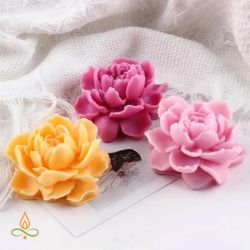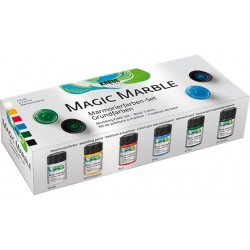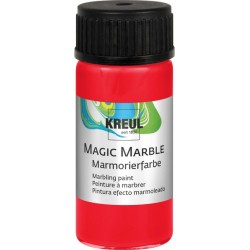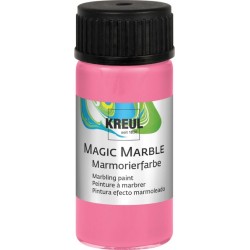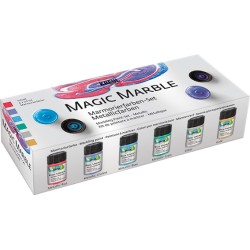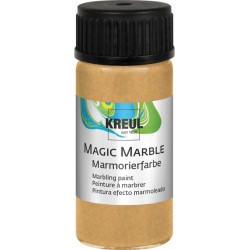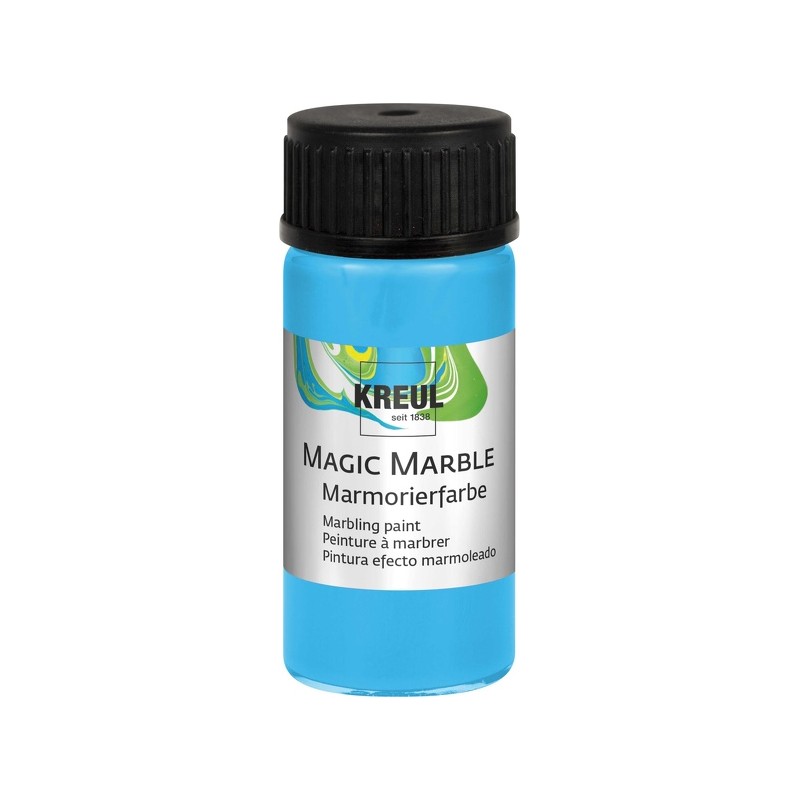


The marbling look is a very popular trend within candle design. Marbling offers unimagined possibilities for creating unusual patterns.
Shake well before use, add drops close to the water surface and create patterns with a wooden stick. Slowly immerse the candle then remove. Remove excess color from the water surface with paper. Add more dye after each candle has been colored.
First, prepare your workspace: protect the table with a cover, have a bucket of water at the right temperature ready, and ventilate the room. If you do not have a bucket, you can line a pot with a plastic bag.
If the air in the room is too dry, the colours dry faster. If the water is too warm, the colours may form a film too quickly. The ideal water temperature is 14°C in a freshly ventilated room. Magic Marble marbling paint is solvent-based and has its own characteristic smell. If this is unpleasant, it is best to marble near an open window so the smell can disappear quickly.
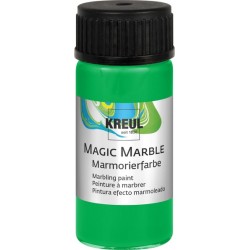
Since the pigments may settle in the bottle, the paint bottles should be shaken well before use. For a marbled pattern, at least two different colours are needed. Drops of each colour should be dripped as close to the water surface as possible. If the bottle is held too far away, the drops will sink to the bottom of the bucket. For marbling, the paint must float on the surface of the water.
Dripping works especially well when the four small holes in the dosing cap are free from paint. It is best to keep them clean and clear any dried paint with a needle. To create the typical marble pattern, use a wooden stick to draw streaks through the colour layer. Then slowly dip the object so that it becomes coated with paint. Blow the remaining paint on the surface aside and quickly remove the object from the water.
The intense, opaque paint is suitable for many objects made of wood, plastic, paper, metal, earthenware, terracotta, glass, and polystyrene. Candles can also be marbled with Magic Marble.
However, we recommend letting the marbling dry for 24 hours before lighting the candles. Ceramic coasters are also often marbled to match the colours. This is a great idea, but marbled ceramics are not dishwasher-safe, so they are best used only for decoration. If you want to protect marbled surfaces from scratches, spray them with clear lacquer after they have completely dried.
On blogs and social media, you sometimes see marbling done with nail polish. What looks easy there is actually not so simple to recreate. Because of its thicker consistency, nail polish quickly clumps on the water surface or forms air bubbles. These will also appear on the marbled objects.
Magic Marble marbling paint has a thin consistency, which helps create an even and smooth marbled finish.
Children love bright colours and patterns, so it is no surprise that they also enjoy marbling. However, slowly dipping the objects and quickly removing them requires some skill and patience. Children aged 6 and above are usually better at this than younger children.
Since the paint is solvent-based and cannot be washed out of textiles, even older children should only use Magic Marble marbling paint under adult supervision.

Data sheet
The marbling look is a very popular trend within candle design. Marbling offers unimagined possibilities for creating unusual patterns.
Shake well before use, add drops close to the water surface and create patterns with a wooden stick. Slowly immerse the candle then remove. Remove excess color from the water surface with paper. Add more dye after each candle has been colored.