What is a candle made of?
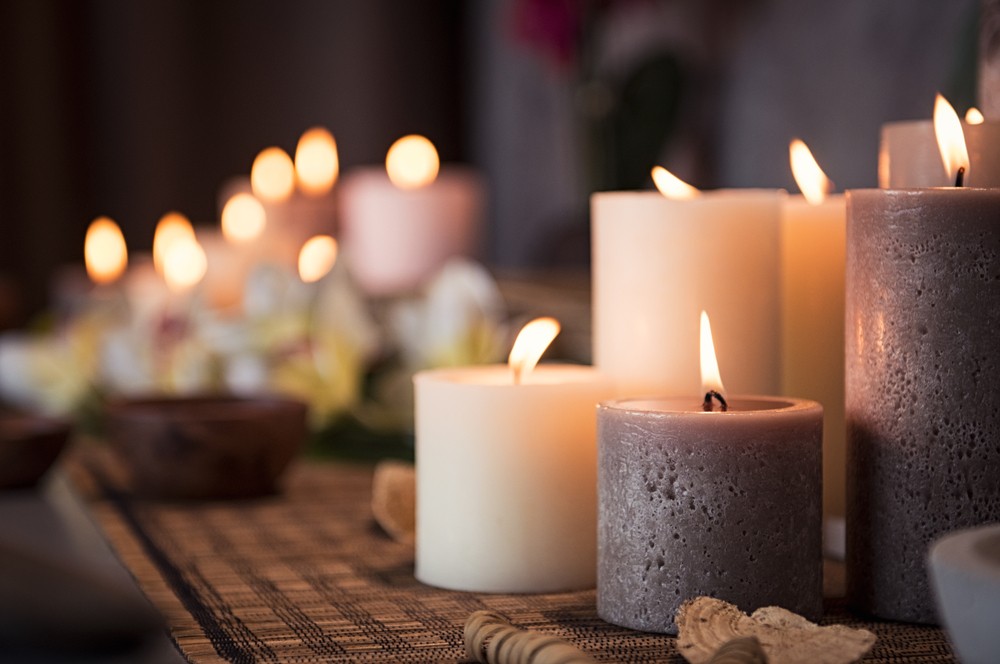
Candles have been around for a long time, someone's first memory of candles may be as a source of light, someone's first memory of a candle may be as an ornament on a Christmas tree, or maybe someone's first memory of candles is as a cosy and lovely decoration in their home. This time we will describe what a candle consists of, which we have known for so long, but may not know so well what is it really made of.
What is it that melts
The answer to the question of what melts is probably the same as if you hadn't even thought about it: wax! Today, waxes of many different materials and properties are available for candle making, but scientifically, wax is defined as a material that has the following properties:
- Solid at room temperature but remains liquid at higher temperatures and when burning;
- It is impermeable to water and also insoluble in water;
- It has a smooth texture and can be polished under slight pressure;
- It has low toxicity and low reactivity;
- Low or no odour.
Candle wax can also be called essentially a fuel since it is an ingredient that melts on contact with heat. Just as humans need food, cars need fuel.
Here are some facts about candle "fuel", or what melts it:
- Until the 19th century, the word "wax candles" was usually used to refer to beeswax candles;
- All "fuels" are based on hydrocarbons, whether of animal, vegetable or petroleum origin. The chemical composition of all fuels used in candle making is similar and all candle fuels burn in the same way;
- Around 700 million kilograms of candles are consumed in the European Union every year;
- Candle fuels burn with a yellow flame due to the presence of carbon;
- No particular fuel type or fuel blend is considered "best" for candle production. All candle fuels, if of good quality, have been proven to burn cleanly, safely and uniformly;
- No fuel does not emit soot. All organic compounds release some carbon (soot) when burned due to incomplete combustion. Soot formation is mainly due to wick length and flame disturbance;
- Well-known candle manufacturers use only high-quality ''fuel'' in their products.
Paraffin wax is the most commonly used today, but natural waxes such as soy, coconut and palm wax have rapidly gained popularity, which is directly linked to the fact that sustainability and eco-friendliness are becoming more and more important factors for people.
Wick
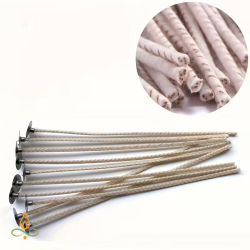
The wick is the magical ingredient that connects the flame to the wax, the ingredient without which it would be impossible to make a candle. To a large extent, the wick and the wax can only spin as if in a synchronous dance if the right size and material of the wick are chosen concerning the type of wax and size of candle already chosen. An inappropriate wick will result in a candle that does not burn completely, may not burn at all or may emit a lot of soot.
There are many types of wick - wood, cotton, flat, round, waxed and unwaxed - but to choose the right one, you need to take into account various aspects - the wax to be used, the size of the candle, the type of candle, also the shape, colour and use of fragrances.
Wax and wick are the bare minimum to make a candle work, but to make a candle more interesting you can add to the list of ingredients with things that give candles a unique look and smell.
Dyes
The shelves are usually adorned with a huge variety of different coloured candles, with new colours and shades appearing every year to keep up with current trends. The choice of candle colours is determined not only by current trends in the world but also by a person's psychological state.
To make coloured candles, dyes are needed. The range of dyes is also ever-widening to meet the needs of both candle makers and candle buyers. Dyes are available in the form of pigments and dyes.
Candle dyes have been around for quite a long time, usually in powder or liquid form, and are added to melted wax according to the manufacturer's instructions, thus creating a fully coloured candle. Of course, there are also different ways to experiment and get multi-coloured candles and different patterns, you just have to experiment.
Colour pigments, on the other hand, are microscopic suspended particles of colour that form a homogeneous wall of colour, so the finished candle is coloured on the outside like a fur coat. Nowadays, manufacturers have come up with various innovations that open up an unimaginable number of creative possibilities, such as marble-effect paints.
Contour paints and candle markers allow you to draw on the finished candle like on paper and create your own unique design, but to get the marble effect on candles, you use pigment paints that you drop in water, make a pattern with a stick and dip the finished candle in these colour patterns. Candle varnishes, on the other hand, are a great way to both protect and make candles shiny, as well as to colour them.
Today's colouring options offer endless possibilities for creative experimentation and for creating candles with a unique look and design. Take a look at our range of dyes and start experimenting.
Fragrances
Burning a candle creates a cosy atmosphere indoors, and this cosy atmosphere is perfectly complemented by the scent that is released when the candle burns. Scented candles can be created using essential or fragrance oils. A small amount of oil can create a powerful scent that completely transforms the mood and feel of a room.
The aroma from a lit scented candle is released by the evaporation of fragrance oils from the hot wax and also from the solid candle itself. Like unscented candles, properly shaped scented candles release mainly water vapour and carbon dioxide during burning. The only difference is that scented candles also release fragrances.
Essential oils are also known to have health and well-being benefits, for example, lavender essential oil has a calming effect, and eucalyptus oil helps improve air quality and nasal well-being.
Aromatic oils, on the other hand, are available in many different scent combinations, allowing you to create the feeling of a tropical trip at home, or to get in the Christmas spirit even when the festive season is yet to come.
Aromatic raw materials used in the manufacture of candles and other consumer products are subject to various health and safety tests. Only specially formulated fragrances specifically approved for use in candles are available in our shop.
The anatomy of a candle doesn't require much in the first place, but the interesting part comes when we want to dress it up in beautiful clothes and scent it with pleasant fragrances. All of this makes candle-making extremely creative, with countless possibilities and ways to create something unique and different from anything we have done before.
Take a look at our blog article section and read another article, share with friends or other candle-making enthusiasts, see you in another entry.
The materials described in this post are available for purchase here.
Related Products

Soy wax for container candles, Kerasoy Container 4130

Blue, candle dye, liquid

Soy wax for container candles, Keragreen Soy C-EU
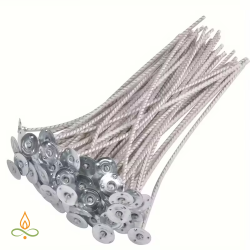
Waxed wick with metal sustainer, TB

Soy wax for container candles, EcoSoya CB-Advanced

Coconut wax for container candles, ecococo ContainerBlend
Green apple, fragrance oil

Lavender, essential oil

Palm wax, crystallized with feather finishing, Britz BWC 07

Green, candle dye, liquid

Rhubarb and strawberry, fragrance oil
Waxed wick with metal sustainer, ECO

Palm wax, crystallised with trees finishing, Britz BWC 16

Coconut holidays, fragrance oil

Magenta, candle dye, liquid

Palm wax, Britz BW701

Orange, candle coloring pen, 29ml

Waxed wick with metal sustainer, Stabilo

Beeswax, white, refined, soft

Cedarwood, essential oil

Pearl sand candle wax, pink

Wood wick, 20x130 mm

Coconut wax for pillar candles, ecococo PillarBlend

Orange, candle dye, liquid

Pearl sand candle wax, light purple

Black, candle dye, liquid

Green, candle coloring pen, 29ml

Lime, essential oil

Palm wax, crystallized with stars finishing, Britz BWC 09

Warm woods & cashmere, fragrance oil

Orange, essential oil

Mint, essential oil

Cloves, essential oil

Red, candle coloring pen, 29ml

Blueberry and vanilla, fragrance oil

Peach couture, fragrance oil

Rocher praliné, fragrance oil
Beeswax, white, refined, hard