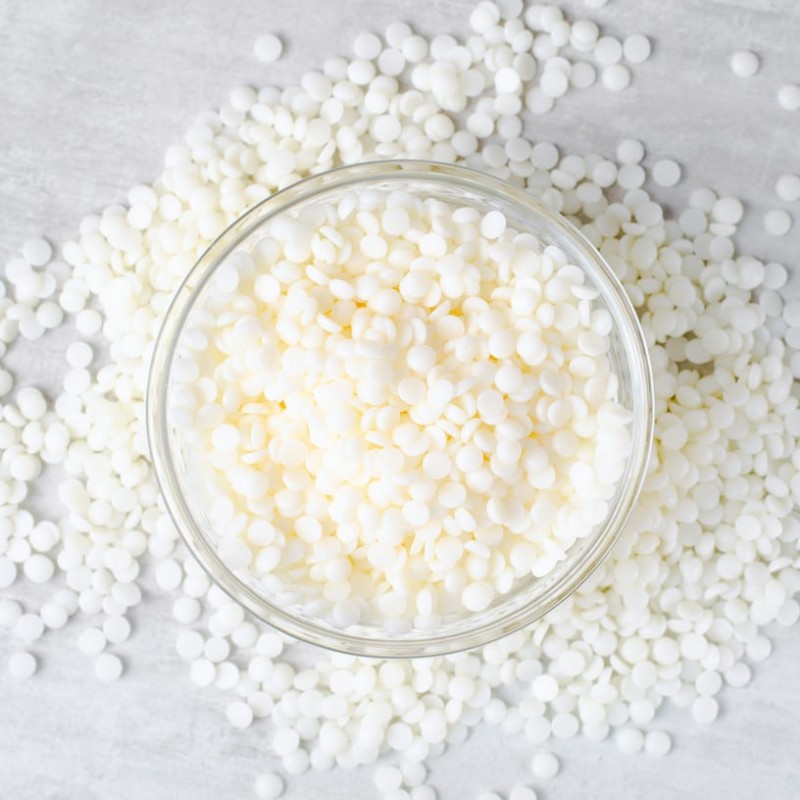


This wax is a 100% natural blend of predominantly coconut wax with natural additives to improve burning and scent dispersion.
This wax does not contain genetically modified ingredients, soy, palm or paraffin products. It is biodegradable and suitable for vegans.
EcoCoco ContainerBlend provides excellent hot and cold aroma dispersion, the bright white color characteristic of coconut wax, and a smooth surface finish , which forms from the first pour, with excellent adhesion to glass or other material.
This wax may contain up to 12% fragrances intended for use with natural waxes .
EcoCoco ContainerBlend is a natural wax blend developed specifically for making container candles. It is predominantly based on coconut wax and provides a bright white colour, smooth surface finish, excellent glass adhesion and excellent hot and cold scent throw. For the best results, follow the instructions below.
Make sure the candle container is clean and free from dust, wax residues or other contaminants. The container should be at least at room temperature. Pre-heating the container to approximately 45–50°C can be beneficial and may help achieve a better finished appearance.
Heat the wax to approximately 70°C, stirring gently while it melts. Temporary heating up to 90°C will not normally damage the wax if it is cooled down quickly. Avoid prolonged exposure to high temperatures, as this may cause discolouration.
Stainless steel melting equipment is recommended. Avoid containers or equipment containing copper or zinc, as these metals may accelerate wax discolouration.
EcoCoco ContainerBlend is suitable for oil-soluble candle dyes.
Powder dyes: heat the wax to approximately 75°C, add the dye and mix until completely dissolved. Powder dyes may also be dissolved in fragrance oil before being added to the melted wax.
Liquid dyes, colour blocks or powder dyes pre-dissolved in fragrance: heat the wax to approximately 70°C before adding the colour. Mix thoroughly to achieve an even colour.
The recommended fragrance load is 5–12%. Fragrance oils specifically developed for use with natural waxes are highly recommended.
Allow the melted wax to cool towards the desired pouring temperature, add the fragrance and mix thoroughly. Where practical, add and mix the fragrance immediately before pouring.
Please note that some fragrance oils, particularly those developed specifically for paraffin candles, may cause bleeding, an undesirable surface finish or poor flame quality.
Natural waxes generally require larger wick sizes than traditional paraffin waxes. The correct wick depends on the container diameter, fragrance load, colour and overall candle configuration.
A wick that is too large may cause sooting, accelerated burning and guttering. A wick that is too small may cause tunnelling and produce a smaller flame.
Keep the wick trimmed to approximately 6 mm (¼ inch). Always test different wick sizes and types to determine the best option for your candle.
The manufacturer's recommended pouring temperature is approximately 60°C.
The ideal pouring temperature may vary depending on the container type and size, fragrance, colour and desired surface finish. If the result is not satisfactory, adjust the pouring temperature in increments of approximately 5–10°C and test again.
Pre-heating the candle container to approximately 45–50°C may also help improve the finished appearance.
Allow the candle to cool undisturbed at room temperature, ideally around 25°C.
Allow the finished candle to cure for at least 48 hours before test burning.
After the candle has cured for at least 48 hours, perform a test burn. Check the flame, melt pool diameter and depth, wick behaviour, sooting and any mushrooming on the wick.
If the flame is too large, the candle burns too quickly or produces soot, try a smaller wick. If the candle tunnels or produces a weak flame, try a larger wick or a different wick type.
Important: Every combination of container size, wax, fragrance, colour and wick must be individually tested to ensure satisfactory and safe burning performance.

Data sheet
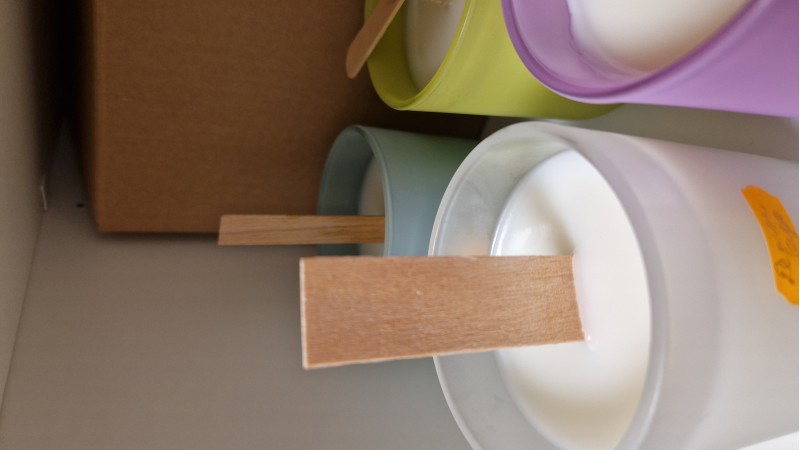
This wax is a 100% natural blend of predominantly coconut wax with natural additives to improve burning and scent dispersion.
This wax does not contain genetically modified ingredients, soy, palm or paraffin products. It is biodegradable and suitable for vegans.
EcoCoco ContainerBlend provides excellent hot and cold aroma dispersion, the bright white color characteristic of coconut wax, and a smooth surface finish , which forms from the first pour, with excellent adhesion to glass or other material.
This wax may contain up to 12% fragrances intended for use with natural waxes .